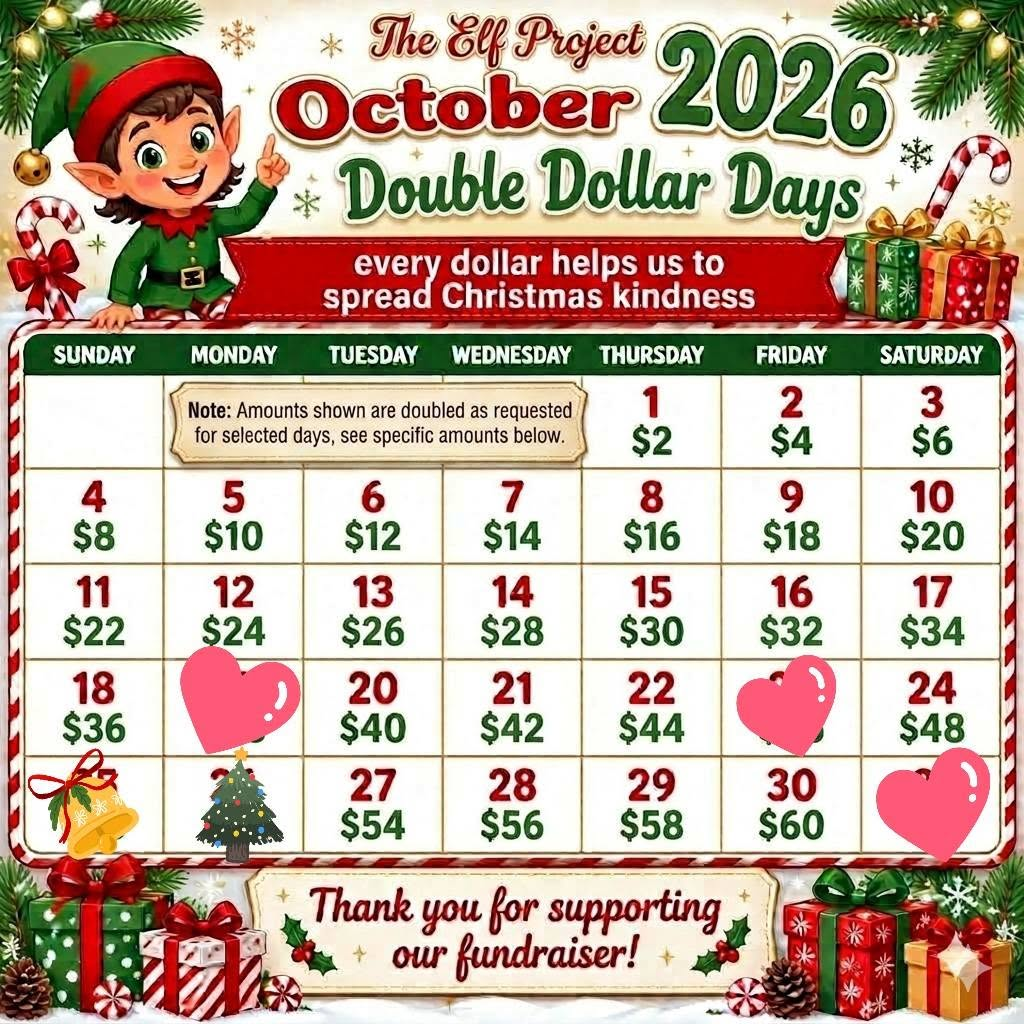
Double Dollars Days are here!!
Join in on the fun with our October Fundraiser.
 A Sweet Christmas meal. bags of meatballs, noodles, and yummy spaghetti sauce for a warm holiday feast.
 Cozy Christmas morning Breakfast. Fluffy pancake mix and sweet syrup for a happy Christmas morning.
 A Sweet Celebration . Cake mix and icing for a special "Happy Birthday Jesus" cake.
 Now the fun part 2 of our elves have issued a challenge. Kathy Christian will personally let you throw 1 pie in her face for every person that donates $50 or more wow. And Donna Phillips will take 5 pies if we hit our full goal. Now I know we love these ladies dearly but come on I want to see them covered in pie
Bringing the Magic of Christmas Home


Since 2014, The Elf Project of Hawkins County has served as a beacon of hope for local families navigating unexpected hardships during the holiday season. When life changes in an instant—due to job loss, family tragedy, or other unforeseen challenges, many families miss the deadlines for traditional assistance programs.
We exist to bridge that gap. As an entirely volunteer-based organization, we rely on the generosity of our community to ensure every child experiences the joy and wonder of Christmas morning. Together, we turn compassion into action, bringing light and lasting impact to local families when they need it most.
How You Can Help
For the families The Elf Project touches, the impact goes deeper than wrapped gifts under the tree. Your contributions help restore dignity to parents, weathering difficult times, provide relief in moments of despair, and light up a season that might otherwise feel dark. Without this support, Christmas morning for some children might pass painfully unnoticed. With it, they experience the joy and wonder we all cherish during this time of year. Be a part of the reason a child believes in the magic of Christmas. Your generosity is the heartbeat of The Elf Project, allowing us to keep the spirit of Christmas alive for families in our community. Here are a few ways you can make a lasting impact:
-
- Sponsor a Child: Ensure a child experiences the magic of Christmas by providing a $100 donation or choose to shop specifically for a child’s Wishlist.
- Donate Online: Contributions can be made through our secure donation site to help us continue our mission of bringing hope to our neighbors.
- Support via Amazon: Visit our Amazon Wish List to purchase and send gifts directly to us, making holiday shopping simple and impactful.
- Join Our Fundraising Efforts: Keep an eye on our website for upcoming fundraising activities and community events. Mark Your Calendar section below.
- Volunteer Your Time: We are an entirely volunteer-based organization. We welcome support in a variety of areas, including gift wrapping, administrative drafting activities, and assisting with our ongoing fundraising initiatives.

Mark Your Calendars

Testimonials
When my wife fell ill around Christmas and had to spend time in the hospital, it was a stressful period for our family, especially with our two boys having special needs. I had to take time off work to care for them, and before we knew it,Christmas programs had already passed us by. But the elves were incredibly supportive, reaching out to my wife in the hospital to arrange for her to participate in a special Christmas program. They put thought into selecting gifts that our childrenwould truly love and cherish. Their efforts meant the world to us, that Christmas remains a precious memory, it was my wife’s last Christmas with us and the elves helped to make it such a nice memory. ---Anonymous
Teen Volunteer
Volunteering with the Elf Project was a blast! My friends and I had such a good time helping out. We got to do a lot of wrapping, which was surprisingly satisfying. Picking out fund toys for the kids was definitely a highlight. It felt great to contribute to something so positive. Can't wait to help again this Christmas. ---Anonymous